What Flores Taught Me About Happiness
When I was young, one of my dreams was to own branded goods. Whenever I visited shopping malls, the stores selling branded items always drew my attention. Bags and shoes—those were the things I craved the most. I would even whisper to myself, “I have to work hard and make a lot of money so I can buy all those things. It must feel… wuaaaaah.”
That dream was more than 20 years ago. At the time, I was just starting out my career in private companies. Every month, I felt like I was always “tekor”—my expenses were always higher than my income—just to keep up with a decent appearance and the white-collar lifestyle back then. There were no online stores offering competitive prices yet. I suffered! Ha ha ha.
A Naïve Move to Flores
In 2004, with all my naivety, I went to Larantuka, East Flores. I thought, “Let’s have an adventure!” It just so happened that I had been selected as one of the district coordinators for a maternal and child health program funded by the Australian government. I was assigned to coordinate activities in two districts: East Flores and Lembata.
The program’s main focus was to reduce maternal mortality during childbirth. The causes? There were a few. Many pregnant women didn’t get regular checkups. They gave birth with traditional healers (dukun) instead of trained village midwives. Others died from excessive bleeding or infections, often because the tools used weren’t sterile.
Why did they choose a dukun over a midwife? There were several reasons. But one major reason was that they didn’t have the money to pay a midwife. Giving birth with a midwife costs more than with a dukun. Of course, there were other reasons too—like how village communities often trusted the dukun more because it was the tradition passed down through generations.
Two Thousand Rupiah a Week—Eye-Opening Experience
We tried to offer a solution to the financial barrier—not by giving out money, but by shifting their mindset. We encouraged them to save, starting early in their pregnancy. In discussions with the mothers, we learned that they could only save Rp 2,000 per week. “We can only afford two thousand a week, Ma’am,” they said. I went silent. Stunned. Shocked. Dizzy, even. But I couldn’t say anything.
Every time I visited the villages, I chatted with the people and learned that most of them only ate once a day. Some survived just on jagung titi—a traditional Flores food made from pounded corn. Their homes had dirt floors. The children wore whatever clothes they could find. In some villages, water was scarce. Even just to take a bath was difficult. I stayed at a retired teacher’s house but often had to “evacuate” to the nuns’ convent just to shower because there was no water. Back then, even eating vegetables was a luxury. The sight of women carrying heavy loads of firewood on their backs was everywhere.
Honestly, witnessing all this made me feel stressed at the time.
In Jakarta, life was so easy. I ate three times a day. Water was always available. My house was modest but decent. I could eat vegetables and meat anytime I wanted. I worked in an air-conditioned office.
And… what I was most proud of at the time: I could buy coffee from a famous American coffee chain that had just entered Indonesia in 2002. I was so proud that I could buy a cup of coffee that cost a minimum of Rp 48,000. Reflecting on it now, I realize that it was a foolish kind of pride.
The Start of a Personal Reflection
From that moment, I started to reflect deeply. The fact that I felt proud about being able to buy a Rp 48,000 coffee—while facing the reality that some people could only save Rp 2,000 a week to avoid death during childbirth—struck me hard. My dream of buying branded items at big malls started to feel off. Images of children wearing tattered clothes and pregnant women dying because they couldn’t afford a midwife replaced the dream. My joy of eating good and expensive food in Jakarta felt uneasy when I remembered villagers who only ate once a day—and only had jagung titi to get by.
As if God wasn’t done teaching me, I met senior consultants — people who clearly earned much more than I did — but who lived incredibly simple lives. Top-notch capability, but their life style was so ordinary. Far from the white-collar lifestyle in Jakarta. Bah! Who was I, really? Just a rookie, still learning the ropes of the social development world!
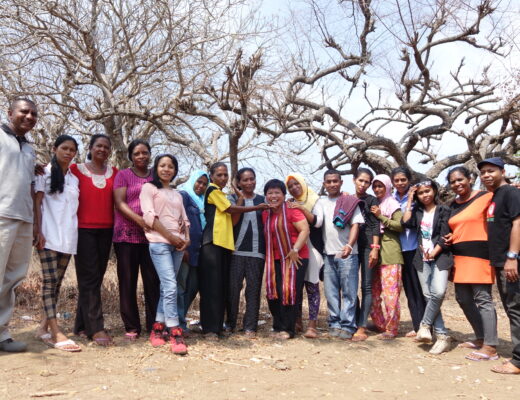
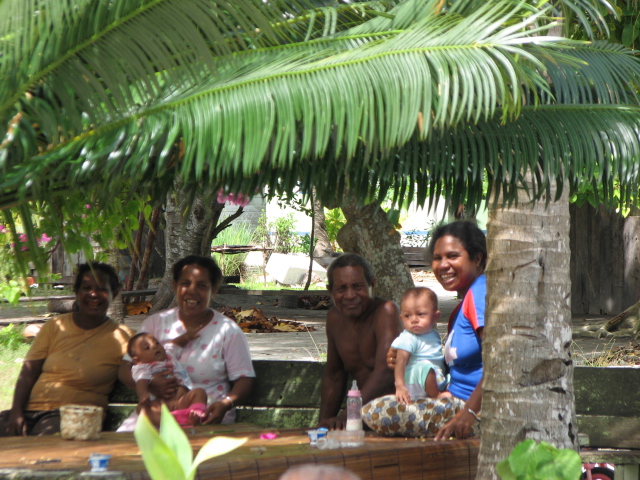
This experience truly opened my eyes. During my time working in Larantuka and traveling to the many districts and villages in Flores and Lembata, I always encountered happy faces. They smiled. They greeted warmly. They chatted casually. Unlike people in Jakarta, whose faces already looked sour early in the morning. How could that be? I was just wondering. I was so amazed, I actually took pictures of their faces everywhere I went in Flores. Sadly, I can no longer access those photos.
A New Definition of Happiness
Maybe I was a little late to learn this, but between 2004 and 2006, I discovered that being happy doesn’t mean having branded goods like I had always dreamed. Living in sufficiency—that might be the better term for living happily. I know the measure of “enough” is different for each person. I just have to be wise about knowing when something is enough for me.
It doesn’t mean I hate branded goods. Not at all. Sometimes, for work purposes, it’s even necessary to wear branded items. I learned that from my friends. I also have two branded bags, gifted by my very generous friends. Ha ha ha. But now, I’m no longer obsessed with owning them. For me today, the value of an item lies in its function or economic value—not in its luxury.
To this day, I still remember those smiling faces in the villages—so friendly, often laughing freely while chatting in their bamboo-walled, dirt-floored homes. From the 40th floor of my apartment, I never want to lose sight of those faces when I look out at the glittering skyscrapers in front of me or when I walk through shopping malls and eat delicious food in fancy restaurants. It always reminds me to be humble and grateful, no matter what my situation is.